
Haywood County Criminal Court Cases
North Carolina splits Haywood County criminal cases between two trial divisions. District Court tries misdemeanors and handles the first stages of felony matters, including early appearances and probable-cause procedure. Superior Court tries felonies. A criminal appeal from District Court ordinarily reaches Superior Court for a trial de novo, which means a new trial rather than a narrow review of the lower court's record.
The Clerk of Superior Court keeps the official files for both divisions. Haywood County municipalities do not run separate municipal criminal courts. A Waynesville, Canton, Maggie Valley, or Clyde police report may start with that town, but the related prosecution belongs in the Haywood County court system. The official Haywood County courts page identifies the county as Prosecutorial District 43, Superior Court District 43B, and District Court District 43.
Haywood Criminal Court Contact Map
Several offices share the justice process, but they do not perform the same task. The clerk supplies court files and certified searches. The District Attorney prosecutes cases. Judges administer their divisions, while criminal magistrates handle warrants, initial process, and release matters. Calling the correct desk saves a trip and avoids asking a court office for a police report it does not hold.
Haywood Clerk of Superior Court
285 N. Main St.
Waynesville, NC 28786
828-454-6501
District and superior criminal files, public terminals, copies, and certified county searches.
Haywood Criminal Magistrates
Waynesville justice and law-enforcement complex
Confirm the current counter
828-456-8191
Warrants, initial judicial process, and release-condition routing.
The Haywood court contact directory shows the official office routing.
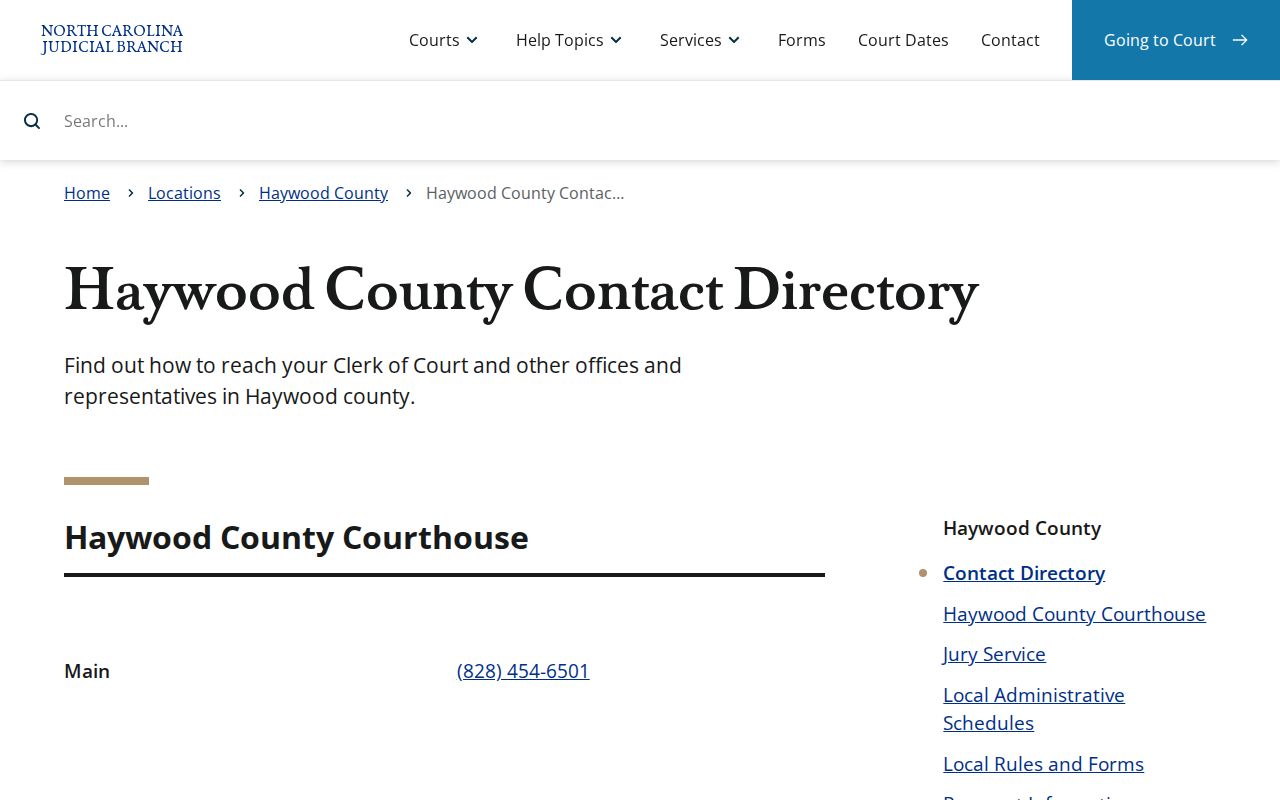
That directory helps distinguish the clerk, judges, prosecutor, and magistrate before requesting a record.
Searching Haywood County Case Records
The fastest first pass is North Carolina eCourts Portal, now used statewide. It gives public case information, but the Judicial Branch warns that Portal is not a formal background-check product. Use a public courthouse terminal for a broader free court search, then inspect the paper or electronic file with the clerk when the result needs context. A certified name-based Haywood County search uses form AOC-CR-314 and costs $25.
- Open the official eCourts Portal and enter a person or business name, a complete file number, or an attorney.
- Use the exposed filters to select Haywood County, criminal case type, status, or a useful filing-date range.
- Match the file number, division, filing date, charges, and available identifiers instead of relying on the name alone.
- Read each event and each charge disposition. A pending count or dismissed count must not be read as a conviction.
- Use the courthouse terminal or ask the clerk for a paper, plain, or certified copy when the online docket lacks the needed document.
| Field label | Type | Required | Use |
|---|---|---|---|
| Smart Search | Text | Yes | Person or business name, case number, or another supported term |
| Advanced filtering | Filters | No | County, case category, status, and date options as exposed |
| Case Number | Text | Alternate | Use the complete Odyssey file number when known |
| Party Name | Text | Alternate | Try exact spellings and name variants |
| Attorney | Text | Alternate | Official guidance supports attorney searching |
The AOC-CR-314 criminal-record search form is for a certified single-county name search. A mailed Haywood County request must use a money order or certified check because personal checks are not accepted. An in-person request may be paid with cash, credit card, money order, or certified check. By contrast, a public terminal search is free to view or email, although printing can carry a charge. Call the clerk for current copy costs and mailing instructions before sending the form.
Haywood Court Records After Odyssey
North Carolina completed statewide Enterprise Justice, also called Odyssey, on October 13, 2025. That milestone makes eCourts Portal the current online route for Haywood County criminal case information. Older instructions that refer to a legacy county system can now lead searchers to the wrong place. Migration does not mean every historic attachment is online, however. Older paper records or converted entries can still need clerk review.
The Haywood courts landing page connects readers to calendars, forms, services, and current eCourts resources.
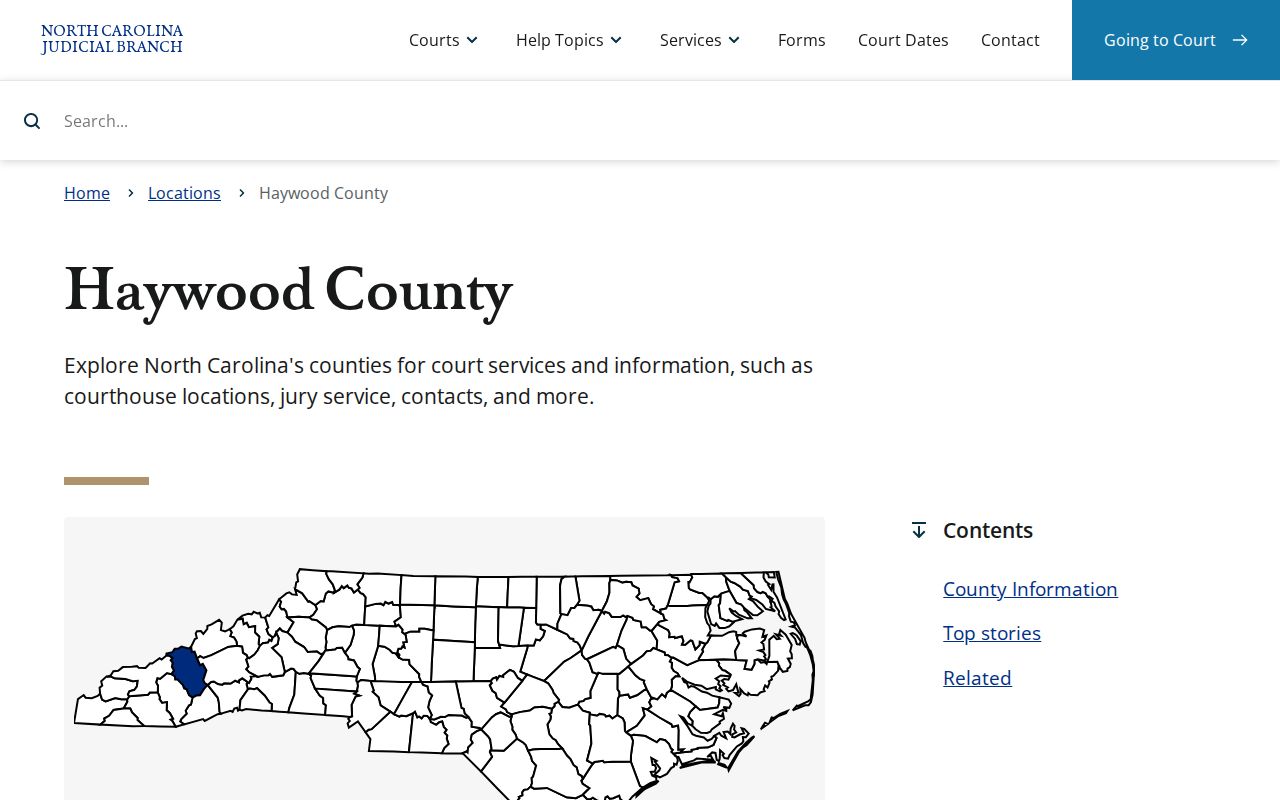
The page is the sound starting point when a saved portal link or old search instruction no longer matches the live court system.
Note: A migrated docket entry can identify a case while the clerk still holds the only available copy of a specific document.
Inside a Haywood County Case File
A Haywood County case file is organized around a file number and court division. The docket may show the State and defendant, counsel, charges, hearings, plea, verdict, judgment, costs, and appeal activity. Each count can have its own result. Documents may be visible in the public view, limited to courthouse access, or available only by asking the clerk. Protected identifiers and confidential victim, minor, or juvenile information are not made public merely because a docket exists.
| Case Number and Court | Haywood County, file number, District or Superior division, case type, filing date, and status |
|---|---|
| Charging Record | Charge description, statute, offense date, level, sequence, and later indictment data when entered |
| Docket Events | Service, first appearance, continuance, motion, plea, trial, judgment, failure to appear, or appeal entries |
| Hearings | Date, time, courthouse, courtroom, and calendar session when scheduled and public |
| Disposition | Outcome for each charge, such as guilty, not guilty, dismissed, deferred, or another court-entered result |
| Sentence | Confinement, probation, costs, fines, and other judgment terms shown in the public record |
Use the judgment and disposition fields to answer what the court decided. The initial arrest charge alone cannot do that job.
Reading Haywood Criminal Case Outcomes
Short docket terms can hide large differences. A dismissal ends a charge without a conviction but does not by itself remove every public record. An acquittal means guilt was not proved at trial. A failure to appear records a missed required court date and may create added process. When several charges appear, read the plea and disposition for each line rather than treating the case header as one result.
- Arraignment
- The stage at which the formal charge and plea are addressed.
- Disposition
- The court-entered result for a specific charge.
- Indictment
- A grand jury's formal felony accusation, not a finding of guilt.
- Trial de novo
- A new Superior Court trial after the qualifying District Court criminal appeal.
- Expunction
- Statutory removal of a qualifying record from ordinary public access after an order and processing.
A prosecutor may change the charge first alleged by law enforcement. Compare the arrest report with the final Haywood County court disposition when the labels do not match.
How a Criminal Case Moves
A Haywood County criminal case can start with an arrest or citation, followed by magistrate process and a first appearance. Misdemeanors remain in District Court for trial. A felony moves through District Court's early steps, then may reach a grand jury, Superior Court arraignment, motions, a plea or trial, and judgment. Post-judgment steps can include an appeal or a later expunction petition when the law permits it.
Case flow: Charges Filed › Arraignment › Pretrial › Plea or Trial › Disposition › Sentencing
No single fixed timetable is supported for Haywood County. Calendar changes, continuances, charging decisions, and the type of case can alter the path. Check the live calendar and event history rather than guessing a hearing date from the filing date.
Missing Haywood Court Case Documents
A visible docket does not guarantee that its complaint, motion, order, or judgment can be opened online. When a needed document is absent, record the full file number and the court division first. Then use the public terminal or ask the clerk whether the item is electronic, paper, archived, restricted, or still being indexed. Paper files are inspected in the county where the case sits.
For a visit, use the Justice Center rather than assuming the historic courthouse or Law Enforcement Center holds the file. Ask about present counter hours, holiday closings, archived retrieval time, and whether photography or a personal device is allowed. The Judicial Branch also links interpreter and disability-accommodation requests from the Haywood County court resources.
The Judicial Branch explains the differences among Portal access, public terminals, paper files, copies, and transcripts in its official court-record access instructions.
Those access methods supply a clear fallback when Smart Search finds the case but not the document needed to understand it.
Haywood Recovery Court Case Outcomes
Haywood County's Adult Accountability and Recovery Court creates a distinct case path. County material describes AARC as voluntary and post-plea, lasting at least 24 months. It combines assessment, treatment, probation, regular court meetings, and life-skills work. Successful completion results in dismissal of charges for a qualifying participant. The court file can therefore show a plea and program events before the later dismissal.
Dismissal at graduation is not the same as automatic expunction. A person reviewing their own Haywood County criminal case should check the final docket, then use the current North Carolina expunction rules to determine whether a separate petition and order are required. The sequence matters because an old portal entry may remain visible until all court and agency processing is complete.
Case Record Access & Restrictions
North Carolina General Statute 7A-109 directs clerks to keep court records open for public inspection subject to law and reasonable rules. That access does not expose full Social Security numbers, financial account data, protected victim or minor information, juvenile files, sealed process, grand-jury deliberations, or expunged material. A public docket can also omit an attachment that remains available through the clerk.
The official Haywood County courthouse page supplies current calendar and courthouse routing.
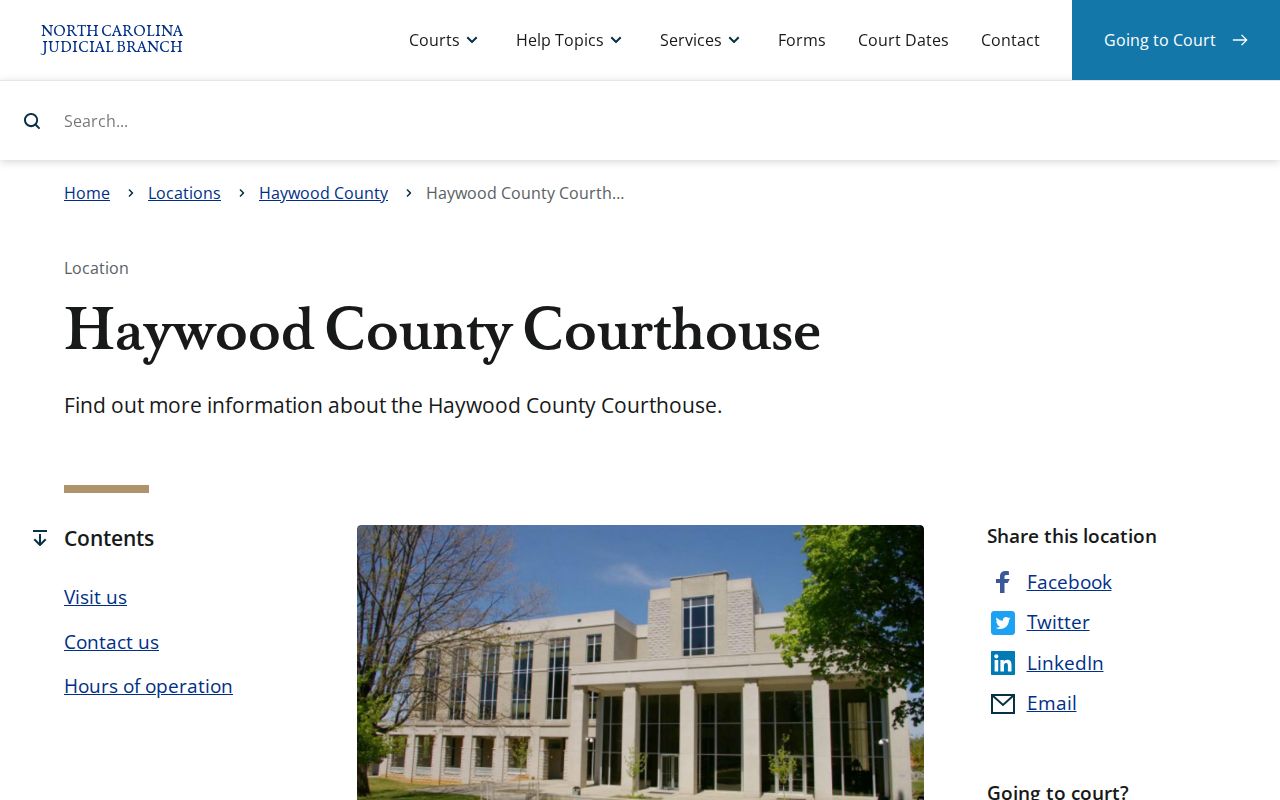
Call the clerk before a visit to confirm counter hours, copy costs, archived retrieval, accessibility arrangements, and current device rules.
Note: Similar names are not enough to establish identity; match the county, file number, dates, charges, and lawful identifiers.